散熱器設(shè)計(jì)準(zhǔn)則--Mentor Graphics公司heatsink資料HeatSink_101
Heat Sink 101:Everything You Ever Wanted to Know about Heat Sinks
Agenda
What is a Heat sink?
Heat Sink Design Criteria
Application Examples
Questions and Answers
What is a Heat Sink?
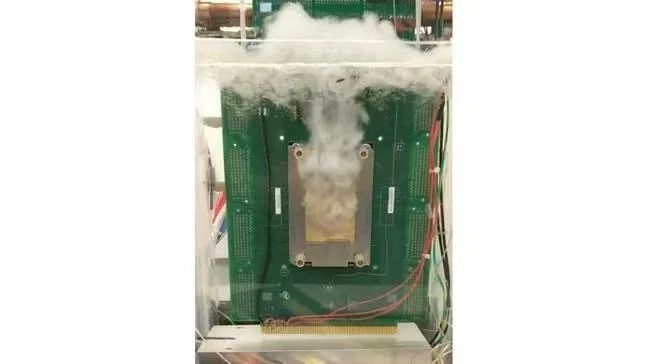
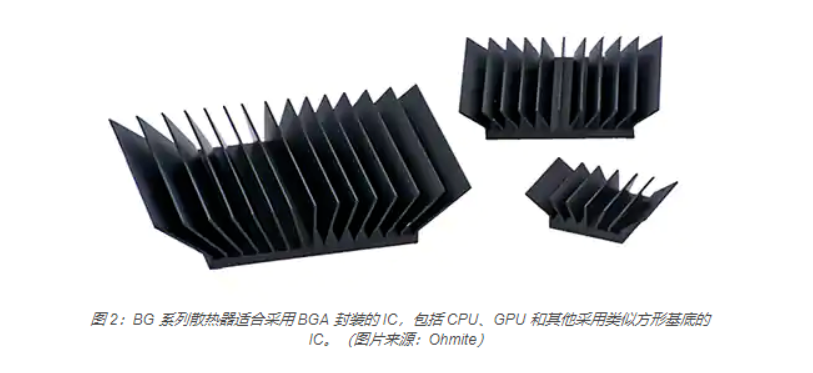
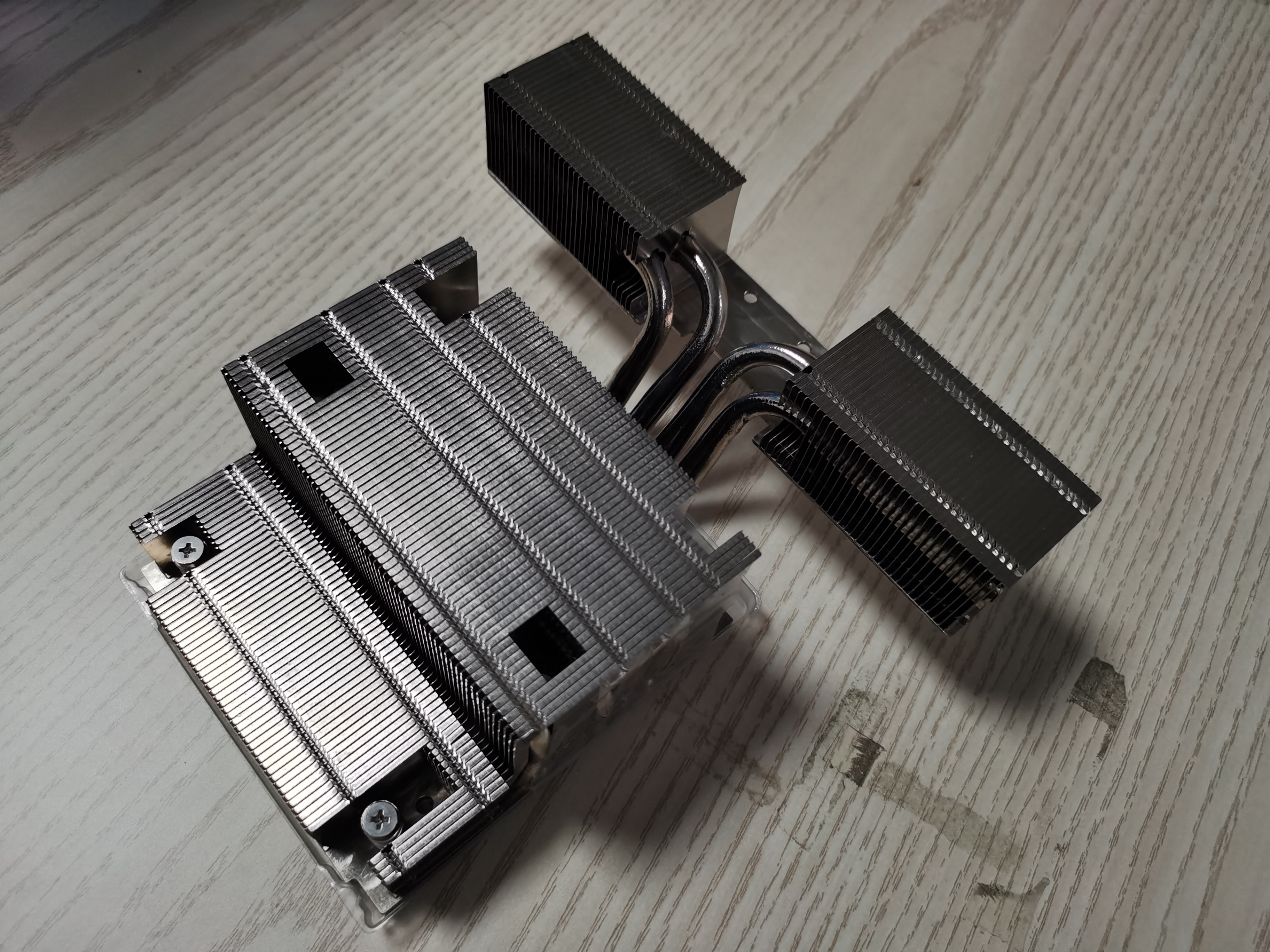
Heat sinks enable a more efficient heat transfer from a heat source to the adjacent fluid by using an extended surface area
Heat gets moved from heat source to heat sink by conduction
Heat sink transfers heat to ambient air by convection
Heat can also be radiated to surrounding environment
Heat Sink Design Criteria
Heat sink design and efficiency vary greatly depending on the construction and application
Factors in selecting heat sink
Component power dissipation and maximum junction temperature
Available volume/space
Interface material/Mounting system
Spreading resistance
Thermal resistance RSA
Pressure drop
Flow by pass
Natural or forced convection
Manufacturability
Cost
Thermal Resistance Definition
Conductive Heat Transfer
? Rk = DT/Q = L/kA (K/W)
? Similar to RW = DV/I (Ohms)
Convective Heat Transfer
The Thermal Budget
A useful tool in helping with Heat Sink selection
Defined as: DTbudget = Q * RJA [K]
Breaks the problem into clearly defined heat paths for a clear design understanding
Case to Sink Resistance:Spreading Resistance
Kennedy Charts can be used to estimate the spreading resistance
See the Reference section for more details
On line calculator from the University of Waterloo
Component encapsulant
Case to Sink Resistance:Interface Materials
Thermal paste (ceramic mixed with silicon grease or hydrocarbons)
Fluids, naturally fill the gap
Thermal resistance is very low
Thermally conductive compounds
Initially flow as freely as grease to fill gaps and then cures with heat to a rubbery state
Approximately same performance as grease
Conductive elastomers
Deform with pressure to fill irregular gaps
Provide electrical insulation
Adhesive tapes
Double sided adhesive to stick to adjacent surfaces
Resistances relatively high
Phase Change Materials
Behave like thermal greases after they reach their melting temperature
Interface becomes thinner until surfaces contact or material viscosity prevents further
A temperature gradient exits between the top and the base of the fin
Due to conduction resistance within the fin
This can be quantified using the fin efficiency formula
h = (tanh mL)/(mL)
m = (2h/kd)0.5
h = Convection Coefficient
k = Conductivity of Fin Material
d = Fin Thickness
L = Fin Height
An ideal fin (Tbase = Ttop) would have an efficiency of 1
Heat Sink Fin Efficiency
Heat Sink Calculations
To find a suitable heat sink for your application, you can use correlations to obtain h values and the Fin Efficiency formula
Flat plate and ducted flow correlations available from most Flow and Heat Transfer books (please see References section)
Also, consider the effects on flow impedance
Few fins - low surface area, low pressure drop
Many fins - high surface area, high pressure drop
There is an optimum number of fins for a given flow rate
Heat Sinks in Natural Convection
Applications
When designing a heat sink for a natural convection application, consider
Heat sink orientation (compared to gravity)
Pin fin heat sink maybe be more appropriate than a plate fin heat sink
Surface finish
Heat transfer by radiation is more predominant
High emissivity surface will help dissipate more heat away from the heat sink
Thermal Design Tools
Hand calculations/Spreadsheet
Excellent tool for early heat sink design exploration
Finite Element Analysis (FEA)
3D numerical analysis
Typically doesn’t calculate convective heat transfer and radiation explicitly
Computational Fluid Dynamics (CFD)
3D Conjugate fluid flow and heat transfer numerical analysis Lab tests
Most value when used as a model validation - rather than for parametric investigation
....
References
Frank White, Fluid Mechanics
Frank P. Incropera, David P. Dewitt, Fundamentals of Heat and Mass
Transfer
Idelchik, I.E., Flow Resistance: A Design Guide for Engineers
Steinberg, Dave S., Cooling Techniques for Electronic Equipment
Kennedy, D.P., “Heat Conduction in a Homogeneous Solid Circular Cylinder
of Isotropic Media”, IBM TR 00.699, 1959
Tony Kordiban, Hot Air Rises and Heat Sinks
CARMA Board Project, California Institute of Technology
熱設(shè)計(jì)培訓(xùn)資料下載:散熱器設(shè)計(jì)準(zhǔn)則--Mentor-Graphics公司HeatSink_101.pdf
標(biāo)簽: 點(diǎn)擊: 評(píng)論: