Evaluation of Heat Pipe Working Fluids In The Temperature Range 450 to 700 K
William G. Anderson1, John H. Rosenfeld2, Devarakonda Angirasa3, and Ye Mi4
1 Advanced Cooling Technologies, 1046 New Holland Ave., Lancaster, PA 17601
2 Thermacore Inc., 780 Eden Road, Lancaster, PA 17601
3 SEST/NASA Glenn Research Center, MS 301-2, 21000 Brookpark Road, Cleveland, OH 44135
4 En′Urga, 1291-A Cumberland Avenue, W. Lafayette, IN 47906717-295-6059,
Abstract. In the temperature range of 450-700 K, there are currently no working fluids that have been validated for heat pipes and loop heat pipes, with the exception of water in the lower portion of the range. This paper reviews a number of potential working fluid including several organic fluids, mercury, sulfur/iodine, and halides. Physical property data are used where available, and estimated where unavailable using standard methods. The halide salts appear to possess attractive properties, with good liquid transport factors, and suitable vapor pressures. Where nuclear radiation is not a consideration, other potential working fluids are aniline, naphthalene, toluene, and phenol. The limited available life test data available suggests that toluene, naphthalene, and some of the halides are compatible with stainless steel, while the other fluids have not been tested.
HEAT PIPE/LOOP HEAT PIPE WORKING FLUIDS
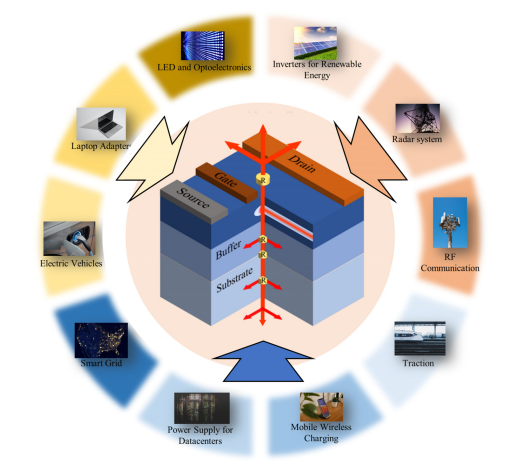
The U.S. Department of Energy (DOE) and the National Aeronautics and Space Administration (NASA) are examining space nuclear electric power systems for the exploration of deep space. Some of the proposed exploratory designs would use heat pipes (HPs) or loop heat pipes (LHPs) as components in a radiator to reject the waste heat in the temperature range of 450 K to 700 K. Another application of heat pipes or LHPs in this temperature range is the cooling of SiC electronics. The benefits of SiC over silicon include its wide band gap energy, high breakdown electric field, and high thermal conductivity.
In the intermediate temperature range, from roughly 450 K to 700 K, there are currently no proven working fluids that can be used in heat pipes and LHPs, with the partial exception of water. Water has been used at temperature up to about 550 K. However, the vapor pressure of water is 26 atmospheres at 500 K, and rises rapidly with further increase in temperature. As the vapor pressure increases, the required envelope thickness to withstand the pressure increases. The resulting increase in mass can limit the practical upper operating temperature of water. In addition,some of the envelope materials that are compatible with water at the lower temperatures become incompatible at higher temperatures.
Similarly, the alkali metals such as cesium, potassium, and sodium are suitable working fluids at temperatures above this temperature range. Heat pipes with various alkali metal working fluids have been operated at temperatures above 700 K, and a cesium LHP has been tested at 850 K (Anderson, 1995b). However, as the temperature is decreased below 700 K, the sonic limit prevents these fluids from operating in this temperature range. As the temperature is reduced, the vapor pressure and vapor density are decreased. At low enough temperatures, the vapor density is so low that the vapor sonic velocity limits the heat transfer. The heat pipe (or LHP) vapor space becomes too large to be practical for alkali metals in the intermediate temperature range.
A number of previous studies have utilized various working fluids. Deverall (1970) reported work with mercury,while Polasek and Stulc (1976) examined sulfur. Rosenfeld and Lindemuth (1992) examined sulfur, sulfur/iodine,and iodine. Saaski and Tower (1977) suggested naphthalene, toluene and the halide salts, SnCl4, TiCl4, and SbCl4 as potential working fluids. Anderson and Bland (1995) considered additional halide salts as well as phenol.
As shown in Tables 1 and 2, the present review examines all of the fluids above, as well as several additional candidate fluids. Unfortunately, fluid property and life test data are incomplete for all of the potential working fluids. To screen the fluids, Merit Number (also known in the literature as Liquid Transport Factor) and vapor pressure as a function of temperature were calculated. Unavailable physical property data were estimated, as discussed below, using the methods of Reid et al. (1987). While this estimated data set is not suitable for heat pipe/LHP design, it is useful in identifying potential working fluids.
熱設計論文下載:HeatPipes-Evaluation-Of-Heat-Pipe-Working-Fluids.pdf
標簽: 點擊: 評論: